





FIFO Life Is Brutal on Your Body. Here Is Why Modalert 200mg Is Quietly Popular on the Sites
The hardest part comes in week two.
Week one feels manageable – adrenaline carries you, the money seems worth it, and you convince yourself you’re handling it well.
Then week two. Your body clock is cooked. Sleep in the donga is shallow and weird, more like lying there hoping than actual rest.
You’re up at 4:30 am, pulling on your boots before your brain has caught up with the fact that you’re awake. And somewhere between the crib hut and the first blast of Pilbara air, it hits you.
You haven’t actually felt rested in six days.
That’s FIFO. Not the version they talk about in recruitment ads. The real version.
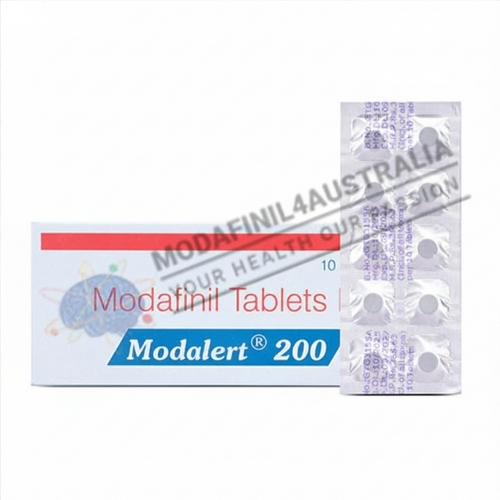
What many people in that situation have quietly started paying attention to is Modalert 200mg. Not loudly. Not through some sponsored post or wellness campaign. Just word of mouth, the way anything useful moves through a mine site. Bloke to bloke. Over smoko. Nothing formal about it.
This piece covers what it is, why FIFO workers in particular find it relevant, and what Craig found out when he started looking into it himself.
Craig’s Story – Deep Into Week Two, Running on Fumes
Craig does iron ore out of the Pilbara. Two weeks on, one week off. He chose FIFO for the income, stayed because the money let his family live comfortably back in Perth, and by year three had quietly accepted that being permanently tired was just part of the job.
Last year, something changed, though. New role, earlier starts. 4 am briefings. Long days in the cab of a haul truck across rough ground. And his concentration started doing something that made him uncomfortable.
“It wasn’t dramatic,” he said. “No falling asleep at the wheel or anything. Just blunt. Slower than I should be. Making calls, I’d question afterwards.”
His crib mate – a driller, who had been on site longer than most – mentioned Modalert 200mg one afternoon. Said he’d been using it for the second half of his rotations for the better part of a year. Said it was the difference between finishing a swing sharp and finishing it completely spent.
Craig went home at the end of that rotation and spent a few evenings reading about it.
Here’s what he found.
What FIFO Actually Does to the Body and Why It’s Not Just Tiredness
Your circadian rhythm is your internal clock. It tells your body when to be awake, when to wind down, when to release certain hormones, and when to drop your core temperature, ready for sleep. It runs on light cues and routine above everything else.
FIFO breaks both.
Early starts drag your wake time into hours your body wasn’t expecting. Long active days push past when your system wants to rest. The donga is dark, but it isn’t quiet. Meals happen at odd times. And just when your body clock starts adjusting to the time zone, the swing ends, and you flip it all back in reverse.
This isn’t a mental weakness thing. It’s physiology.
The disruption compounds across rotations, too. Three swings in and you’re not just tired from this rotation. You’re carrying debt from the last two as well. Many long-term FIFO workers are operating in a state of genuine, clinical sleep disruption without anyone ever having framed it that way for them.
Shift work sleep disorder is a real medical diagnosis. Excessive sleepiness during work hours, poor sleep during rest periods, and slower cognitive performance. Sound familiar?
That’s the context. That’s why Modalert 200mg comes up in these circles. Not as a cheat code. As something that addresses a real, medically recognised problem.
What is Modalert 200mg, exactly?
Simple answer: one ingredient.
Each tablet is 200mg of Modafinil, manufactured by Sun Pharmaceuticals – one of the better-regarded generic medicine producers globally. Approved here by the TGA, in the US by the FDA, and by several other regulators internationally.
Modafinil was originally developed for narcolepsy back in the late 1970s. Narcolepsy is where the brain loses the ability to maintain wakefulness reliably on its own – people fall asleep without warning, mid-conversation, mid-task. Modafinil was built to address that specific failure in the brain’s alertness system.
From there, its applications widened. Obstructive sleep apnea. And specifically, shift work sleep disorder, which is the one most relevant to what Craig was dealing with.
It’s a Schedule 4 prescription medicine in Australia. Legal to use, but you need a valid script. If you’re genuinely managing sleep disruption from rotating rosters, the conversation with your GP is worth having.
Why Does It Feel Nothing Like Coffee or an Energy Drink?
This is the bit that catches most people off guard.
The assumption is that it’s basically strong coffee in tablet form. It isn’t. Not even close.
Coffee works by blocking adenosine receptors. Adenosine is the chemical that accumulates in your brain throughout the day and makes you progressively sleepier. Caffeine sits in those receptors and stops adenosine from doing its job. It delays the tired feeling. But here’s the catch – all that adenosine is still building up behind the caffeine, waiting. The moment the caffeine clears your system, it floods in at once. That is the crash. That’s why two coffees at 2 am sometimes makes things worse, not better.
Energy drinks do the same thing faster and louder. The spike is sharper. So is the drop. And the jittery, wired-but-still-exhausted feeling that comes with it isn’t exactly useful when you’re operating heavy machinery.
Modafinil works on entirely different systems.
Rather than blocking the tired signal, it supports the systems your brain uses to actively create wakefulness. Dopamine. Histamine. Norepinephrine. These pathways are what generate genuine alertness from the inside. Modafinil supports them quietly and steadily instead of papering over the problem.
Most people describe the effect as unremarkable in the best way. They don’t feel high or wired or buzzed. They just feel like themselves. Awake. Present. Able to think.
On a mine site at 6am, that’s actually a big deal.
What Craig’s First Swing on Modalert Looked Like?
He spoke to his GP before starting anything. Craig is on blood pressure medication and wanted to make sure there were no conflicts before trying something new. His doctor checked his medications, asked about his roster and sleep patterns, and wrote the script.
The first dose was on Tuesday of week two. Hardest part of the swing. He took it about an hour before his 4am start, with water and something small to eat.
He didn’t feel anything obvious at first.
What he noticed was the absence of something – that heavy, pressing feeling behind his eyes that usually arrived by mid-morning. It wasn’t there. He tracked his instruments properly through the shift. Made decisions without the half-second lag he’d gotten used to.
By Wednesday afternoon, he was thinking clearly at 2 pm. On a second-week Tuesday, that was basically unheard of.
He wasn’t superhuman. He wasn’t buzzing. He just felt like a version of himself that had slept properly the night before.
“It doesn’t fix the roster,” he said. “You’re still doing two weeks. You still get tired. But it takes something off the second week that nothing else touched.”
What It Won’t Do – Being Straight About This
Modalert is not a workaround for sleep. The biological need for rest doesn’t disappear because you’re functioning better. Sleep debt still builds. It still needs to be paid back during your week off.
It also isn’t the same for everyone. Some people notice a genuine difference straight away. Others feel something more subtle. Some don’t find it particularly helpful at all. You won’t know until you try it, and the right way to try it is with a doctor involved.
No alcohol while using it. That’s not a guideline. That’s a hard stop.
And it won’t address the underlying causes of poor site sleep. If the donga is noisy, if you’re anxious, if your diet is all over the place – those things still need sorting. Modalert is one tool, not the whole solution.
Practical Things Worth Knowing
Take it about an hour before you need to be switched on. For most FIFO workers, that’s an hour before your briefing starts. With food and water.
Don’t take it too close to when you’re planning to sleep. The effect holds for six to ten hours, depending on the person. Poor timing will cost you the rest you most need.
Starting out? Try Modalert 100mg first. Get a feel for how your body responds before going to the full 200mg.
Most common things people report: mild headache, dry mouth. Both settle with water and food throughout the day. Neither tends to be a dealbreaker.
If you’re on other medications – blood pressure, antidepressants, anything ongoing – talk to your GP before starting. Craig’s appointment took about ten minutes. Made everything a lot more straightforward.
Why Does It Travel the Way It Does on Mine Sites?
There’s no campaign behind this. No company is pushing it through site communications. It moves the way useful things always move through those environments: someone mentions it because it worked for them, someone else asks a few questions, and by the next swing, they’ve sorted their script and made up their own mind.
Underneath that is a problem that doesn’t get talked about enough. Long rotations, wrecked body clocks, physically and mentally demanding work, and an industry culture that often treats exhaustion as something you just push through. Shift work sleep disorder is medically real and genuinely underdiagnosed in FIFO communities.
Modalert 200mg doesn’t fix any of that structurally. But for the people managing it day to day, out on site, trying to stay sharp and safe through the back half of a swing – it’s one of the more well-researched, clinically recognised options around.
Modafinil 4 Australia supplies Modalert 200mg across the country. Discreet packaging, fast delivery, and real support if you need it.
Frequently Asked Questions
Q1. Is Modalert 200mg legal to use in Australia?
Ans. Yes, with a prescription. Schedule 4 medicine. Talk to your GP about your sleep issues and roster, and they can assess whether it suits your situation.
Q2. How is it different from coffee or energy drinks?
Ans. Coffee blocks the receptors that signal tiredness and delays the crash – it doesn’t fix anything underneath. Modafinil supports the brain systems that generate wakefulness directly. Steadier, longer lasting, and no hard drop when it wears off.
Q3. Will it stop me sleeping when I need to?
Ans. No. It supports wakefulness during your active hours. It doesn’t override your ability to sleep when your rest window comes around.
Q4. What do most people actually notice when they use it?
Ans. Steadier focus. Less of the blunted, slow-reaction feeling that builds through a long rotation. Some mild headache or dry mouth early on, both of which ease with water.
Q5. Should I take it every day on site?
Ans. Most doctors advise against daily continuous use. A lot of FIFO workers use it for the second week of their swing when the fatigue peaks, not throughout. Your doctor will give you guidance specific to your situation.