




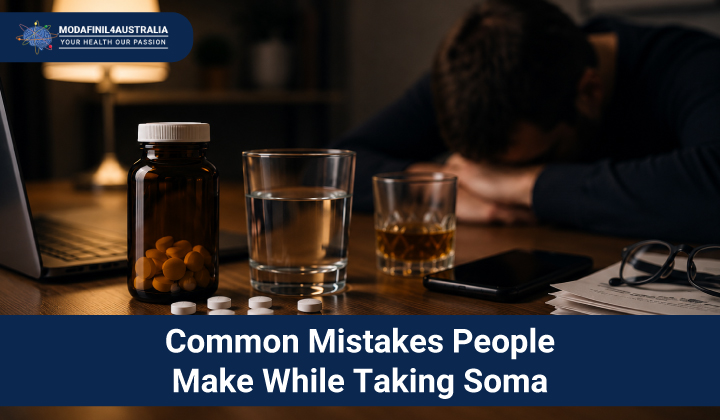
Common Mistakes People Make While Taking Soma
Jamie works long days. Desk job, two screens, a commute that eats forty minutes each way. By Thursday his shoulders are up near his ears and he doesn’t even notice anymore. The tension lives there now – neck, upper back, jaw sometimes. He stretches maybe twice a week, sleeps badly, drinks too much coffee, and tells himself he’ll sort it out on the weekend.
He started using Soma 350mg after a bad episode of lower back spasms six months ago. A GP suggested it for short-term relief. It helped. A lot, actually.
But somewhere between then and now, the way he uses it shifted.
He’s not alone in that.
Why People Misread What Soma Actually Does?
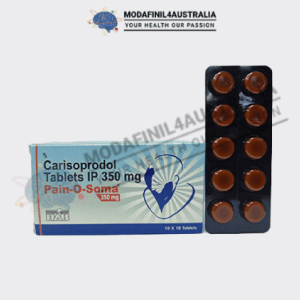
Carisoprodol – the active compound in Soma – is a muscle relaxant. It works on the central nervous system, interrupting pain signals between the nerves and the brain. It’s designed for short-term use alongside rest and physical therapy. A few weeks at most.
What it feels like, though, is something else.
It feels like everything is slowing down. The physical tension is released. The mental noise is quieting. The day finally became manageable.
For someone carrying a lot – stress, bad posture, not enough sleep, too many obligations – that effect can start to feel like relief in a much broader sense than it’s intended to provide.
That’s where the misuse starts. Not dramatically. Just gradually, quietly.
Mistake #1: Treating It Like a Daily Wind-Down
This one happens slowly enough that most people don’t notice it happening.
A rough Monday. Soma helps. Another rough week. Soma again. Then it becomes the default. The thing that signals the end of the day. The switch that turns the tension off.
The problem isn’t the medication. The problem is that the stress causing the tension hasn’t gone anywhere. It’s still there the next morning – in the tight chest, the clenched jaw, the shoulders that won’t drop.
Emotional stress and physical tension are not separate systems. They feed each other constantly. A body that carries chronic stress will keep producing muscle tightness regardless of what you take before bed.
Using a muscle relaxant daily to manage stress response isn’t recovery. It’s postponment.
Burnout culture makes this worse. There’s a very modern version of coping that looks like functioning perfectly until you can’t – and then finding whatever makes it bearable for one more day. Soma can slot right into that pattern without anyone designing it that way.
Mistake #2: The “Just One Drink” Calculation
This one has a specific kind of logic behind it that feels reasonable until it isn’t.
Friday night. Dinner out. A glass of wine. Soma is already in the system – taken earlier, still active. It’s just one drink. It’ll be fine.
Except both alcohol and carisoprodol are central nervous system depressants, and combining them doesn’t just add the effects. It amplifies them. The drowsiness becomes heavier. Coordination goes. Reaction time slows in ways that aren’t always obvious until something happens.
Healthdirect Australia explains that combining alcohol with medicines that slow brain activity – and carisoprodol does exactly that – meaningfully increases drowsiness and the risk of accidents. That word “meaningfully” is doing real work in that sentence.
The mistake isn’t a moral one. It’s the assumption that because one thing is okay and the other thing is okay, the combination is okay. That’s not how CNS depressants work.
Mistake #3: The More-Is-Faster Logic
It’s a very human impulse. The pain is bad. The first dose hasn’t kicked in yet. So.
Taking more than prescribed doesn’t speed up the effect – it increases the risk of side effects like extreme drowsiness, confusion, and in higher doses, more serious CNS depression. The compound doesn’t work faster with more of it. It just hits harder in ways that aren’t useful.
Impatience is the trigger here. Most people who take an extra dose aren’t reckless. They’re in genuine discomfort and the 30-minute wait feels unbearable.
Sitting with discomfort is hard. But doubling up is how mild side effects become serious ones.
Mistake #4: Treating the Symptom, Not the Source
This is the big one. The one that keeps people stuck.
Back pain, neck tightness, muscle spasms – for most people under 50 without a specific injury, these are downstream effects of how they live. Sustained sitting. Poor screen posture. Dehydration. Bad sleep. Not enough movement. Overtraining without adequate rest.
Soma can support recovery from acute spasm. It genuinely helps.
But it can’t fix the posture. It can’t undo eight hours at a desk with your head pushed forward. It won’t hydrate you, strengthen your core, or improve the quality of your sleep.
Taking a muscle relaxant to manage pain that is being recreated daily by lifestyle is a loop. Relief, recurrence, relief, recurrence.
The question worth asking isn’t just what will make this hurt less. It’s why this keeps happening.
Mistake #5: Expecting It to Fix Emotional Exhaustion
This is underreported because it sounds strange. But it’s real.
Nervous-system fatigue is a physical state. When you’ve been under sustained mental pressure – overwork, relational stress, financial worry, emotional overload – the body genuinely tightens. The muscles brace. The jaw clenches. The neck stiffens.
You might feel like you have a muscle problem when what you actually have is a stress and recovery problem.
Soma relaxes skeletal muscle. And sometimes, when the tension is largely physical, that relaxation cascades and the whole system quiets down. But not always.
Sometimes the body relaxes before the mind does. You’re drowsy and loose, but the anxiety is still running. The thoughts are still moving. The physical relief doesn’t transfer.
People find this confusing. They thought it would feel better than this. Using higher doses trying to find that feeling is one of the more subtle ways dependence starts to develop.
Mistake #6: Taking It at the Wrong Time and In the Wrong Way
Timing matters more than most people realise.
Taking Soma late at night when you need to function normally the next morning creates a grogginess hangover. The half-life means it can still be active when you wake up. Driving while residually sedated is a real risk, not a hypothetical one.
Taking it with a heavy meal can slow absorption unpredictably. Taking it inconsistently – sometimes at night, sometimes after dinner, sometimes in the afternoon – makes it hard to understand what effect it’s actually having.
Random use creates random outcomes. That makes it easy to misattribute how you’re feeling, and harder to notice when your use is shifting beyond what was originally intended.
Soma tablets Australia-wide are the same compound, same mechanism. Context matters. When you take it, what you’ve eaten, how tired you already are, whether you’ve had anything to drink – all of it changes the experience.
What Smarter Use Actually Looks Like?
None of this is complicated, but it’s easy to slide away from when you’re in pain and tired and just want things to feel better.
Short-term use – genuinely short-term. A few weeks. Not months. Not “whenever things get bad.”
No alcohol in the window when it’s active in your system.
One dose at the prescribed amount. Not two because one seems like it’s not working fast enough.
Taking it at a consistent time that accounts for your morning. If you need to drive or function the next day, that matters.
Pairing it with actual rest. Not taking it and then scrolling for two hours. The compound works better when the body is genuinely resting.
And if the pain keeps coming back after the short-term use ends – see someone. A physio, a GP, someone who can look at why the muscle tension keeps returning rather than just what will suppress it this time.
The Bigger Picture
There’s a version of modern life that has made chronic body tension feel normal.
People carry it so constantly that they forget what it felt like not to. Tight shoulders, stiff back, jaw that aches in the morning – these get absorbed into the background of just existing.
Soma, used well, is a useful short-term support during acute recovery. Used carelessly, it becomes a way of managing a life that is asking too much of the body without ever addressing what’s asking too much.
Neither of those is a judgement. They’re just different outcomes of the same compound, separated by how much attention someone is paying.
If you’re looking for Soma 350mg in Australia and you want a straightforward, discreet option, Modafinil 4 Australia ships Australia-wide with discreet packaging – nothing on the outside indicates what’s inside. If you have questions before ordering, you can contact the team directly without it being a whole thing.
Take care of the muscle. But also take care of what’s causing it.
Frequently Asked Questions
Q1. Can Soma be taken every day?
Ans. It’s designed for short-term use – a few weeks at most. Daily use over a longer period raises the risk of dependence and means the underlying cause of the tension probably isn’t being addressed.
Q2. Does Soma help with stress?
Ans. Indirectly, sometimes. If stress is causing physical muscle tension, relaxing the muscle can bring some relief. But it’s not treating stress itself and expecting it to will usually lead to disappointment.
Q3. Will it make you sleepy?
Ans. Yes, often. Drowsiness is one of the most common effects of carisoprodol. Most people find it’s best taken when they don’t need to drive or operate anything that requires full concentration.
Q4. Can you drink alcohol with it?
Ans. Not advisedly. Even one drink in combination with Soma increases CNS depression more than either does alone. The drowsiness gets heavier and less predictable.
Q5. How long does Soma 350mg last?
Ans. Effects are typically noticeable for four to six hours. The compound itself stays active in the system longer – which is why residual grogginess the next morning is possible if taken late.
Q6. Is Soma addictive?
Ans. It can be. Carisoprodol has the potential for dependence with extended or heavy use, which is exactly why the short-term guidance exists. Most people who use it responsibly for a few weeks don’t experience withdrawal. The risk climbs with duration and dose.